The owner’s January checklist: 1099s, K-1s and W-9s
January is when you collect what your CPA needs: who you paid, who pays you, and the year-end statements for every company.
Send one package per company rather than a folder of loose files. Say what is on file, what is expected and what is missing, so your CPA does not have to ask twice.
Several deadlines fall close together at the start of the year. Businesses generally must send Forms 1099-NEC to contractors and W-2s to employees by the end of January. Banks and brokerages issue their own 1099s through February. Partnerships and S corporations issue Schedule K-1s later, often in March, which is why an owner’s personal return frequently waits on the companies.
Dates shift when they fall on a weekend, and state rules differ. Your CPA will confirm the dates that apply to you; the point of a checklist is to know, in the first week of January, what is still outstanding.
A 1099 cannot be prepared without the contractor’s legal name, address and taxpayer identification number, which come from Form W-9. Collecting a W-9 before the first payment is far easier than chasing one in January. Keep each W-9 with the vendor’s record, and note which vendors were paid enough during the year to need a 1099.
Your CPA will ask for the same things for each company: twelve months of bank statements, the year-end loan statements, payroll reports, the fixed assets bought or sold, and mileage. Keeping one folder per company for each tax year means a missing month is obvious and nothing from one company is filed under another.
For your personal return, add the K-1 from each company, the 1099s from banks and brokerages, mortgage interest statements and property tax bills.
Expect questions. Answer them in one place, and keep the answers with the year’s folder, so next January starts from what was settled rather than from memory.
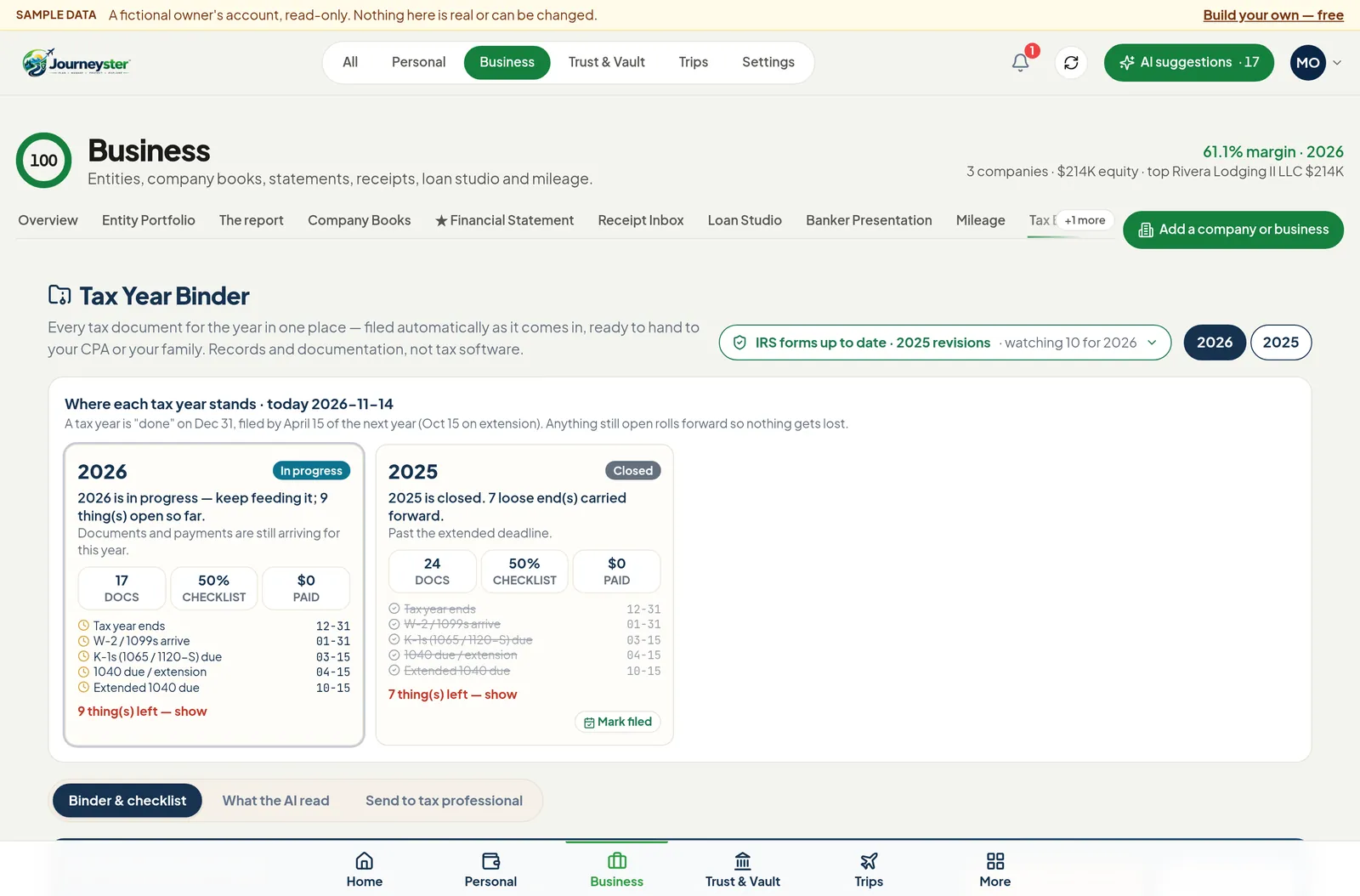
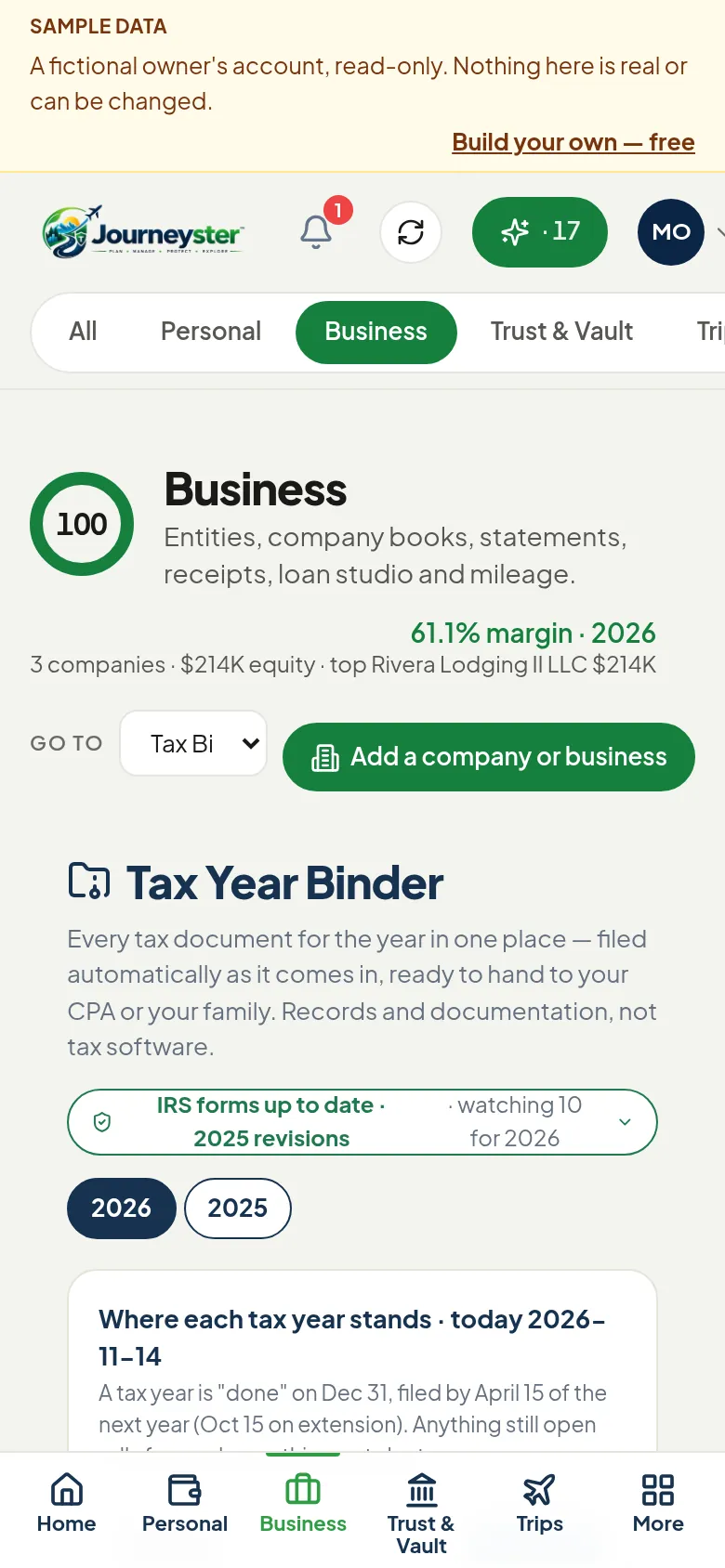
The Tax Year Binder keeps a package per company and year with on file, expected and missing, and hands it to your CPA. Whether a payee needs a 1099 is your CPA’s call, not the product’s.
A general guide, not legal, tax or lending advice. Your lender, CPA or attorney decides what applies to you.