What a bank asks for on a personal financial statement
A bank asks for what you own, what you owe, what you might owe, and what you earn — all as of one date, signed by you.
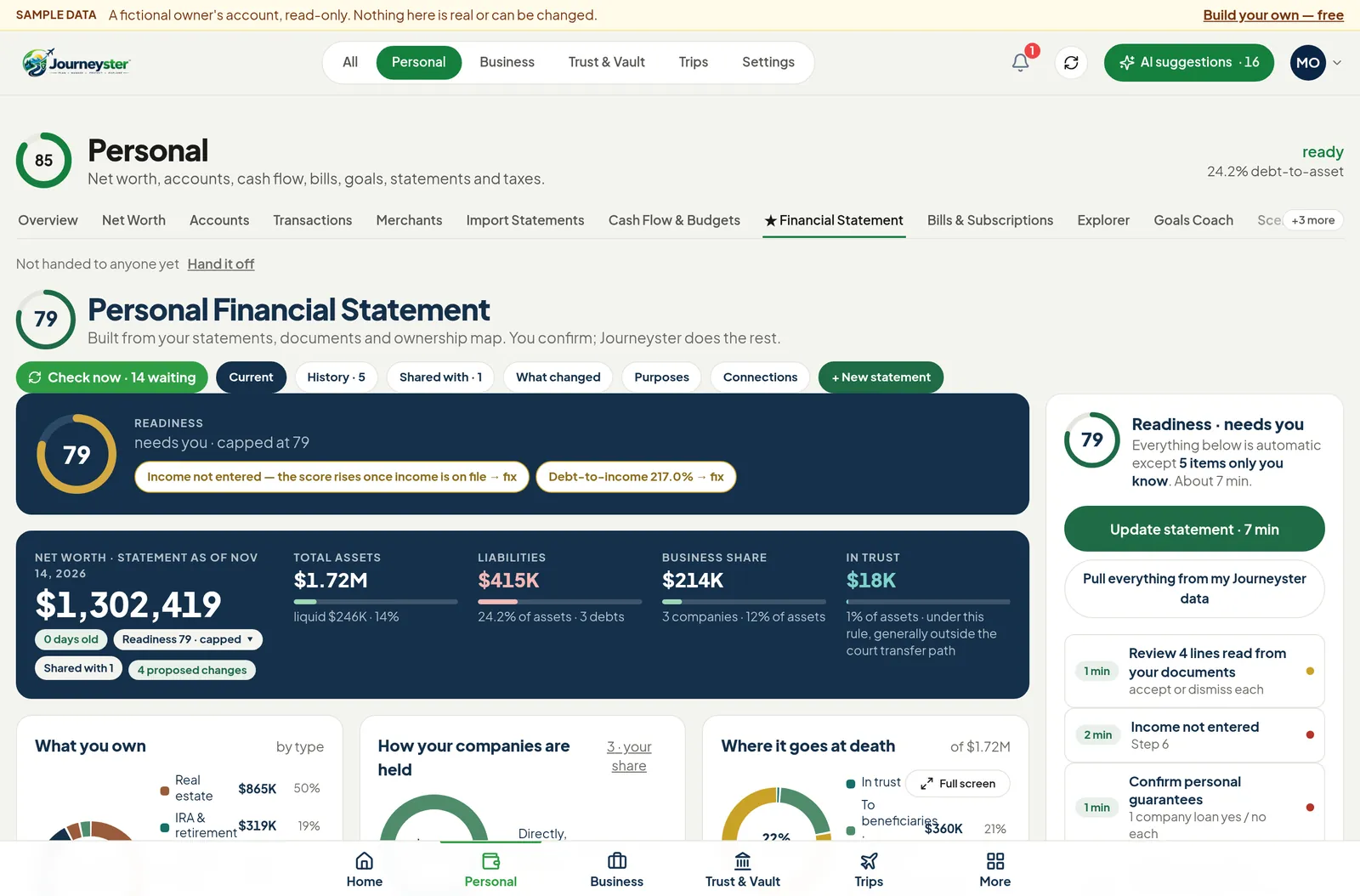
Assets: cash, retirement and brokerage accounts, real estate, your share of each company, and other property.
Liabilities: mortgages, notes, credit cards, taxes owed.
Contingent liabilities: debts you would owe only if something happens, such as a loan you signed a personal guarantee for.
Income: salary, distributions, rent and investment income for the year.
The business interest line. The bank wants each company, your percentage, and how you arrived at the value. Keep the basis written down: book equity, an appraisal, or a recent offer.
The real estate schedule. Each property needs its value, its debt and how title is held.
Guarantees. Owners often leave these off because no payment is due. The bank already knows about its own; list the others.
A personal financial statement is a dated snapshot. A loan made on last year’s snapshot is renewed on this year’s, so most banks ask a guarantor for a fresh statement once a year and again whenever a new loan is requested. The request usually arrives a few weeks before the renewal date, and the statement is expected to be no more than about ninety days old when the bank reviews it.
The bank is reading for three things: what you could sell or borrow against, what you owe and to whom, and what you have promised on someone else’s behalf. That last group — guarantees and co-signed debts — is the one owners most often leave out, because it does not feel like a debt until it is called.
The most common problem is a figure nobody can trace. A home value typed from memory, or a brokerage balance from “sometime last spring”, invites a follow-up question and a delay. Put a source and a date beside each figure: the October bank statement, the county assessment, the brokerage statement of September 30.
The second is double counting. If you own 60% of a company that owns a building, the building belongs on the company’s books and your 60% interest belongs on your statement — not the whole building.
The third is inconsistency between years. A banker will set this year’s statement beside last year’s. A line that drops by half or disappears should have a one-sentence reason ready.
Kept this way, next year’s statement is a matter of updating the figures that moved rather than starting again.
Statement Studio builds the statement from your record, shows the source and date of every line, and locks it as a version you can share by link and code.
A general guide, not legal, tax or lending advice. Your lender, CPA or attorney decides what applies to you.