How a trust holds an LLC interest
A trust holds an LLC interest when the membership interest is assigned to the trustee and the company’s records show the trust as the member.
The membership interest is the thing being moved — not the company’s bank account or its property.
An assignment is the document that moves it. The operating agreement may require the other members’ consent first.
The company’s own records — its member list or schedule — should then show the trustee of the trust as the member.
A trust is often signed once and the companies formed afterwards are never assigned to it. The trust exists; the newer LLC sits outside it.
Lenders can also restrict transfers. A loan agreement may need the lender’s consent before an interest moves.
A revocable living trust is commonly used so that what a person owns can pass to the people they choose without a court process. An LLC membership interest is property like any other; if it stays in the owner’s own name, it is generally outside the trust no matter what the trust agreement intends.
Whether a trust is right for you, and which kind, is a question for your attorney. This guide describes only the paperwork that shows the transfer happened.
Three documents usually matter. The assignment of membership interest is the short document by which the member transfers the interest to the trustee of the trust. The operating agreement may restrict transfers or require the other members’ consent, and often needs an amendment naming the trust as the member. The company’s own records — its member ledger or schedule of members — should then show the trust as the holder.
Some states and some lenders ask for more. A loan agreement can require the lender’s consent before ownership changes, and an S corporation can only be held by certain kinds of trusts. These are reasons to have your attorney and CPA review the transfer before it is signed.
An interest listed on a schedule but never assigned is the gap attorneys most often find. Knowing which interests are in that position is the useful result of the exercise.
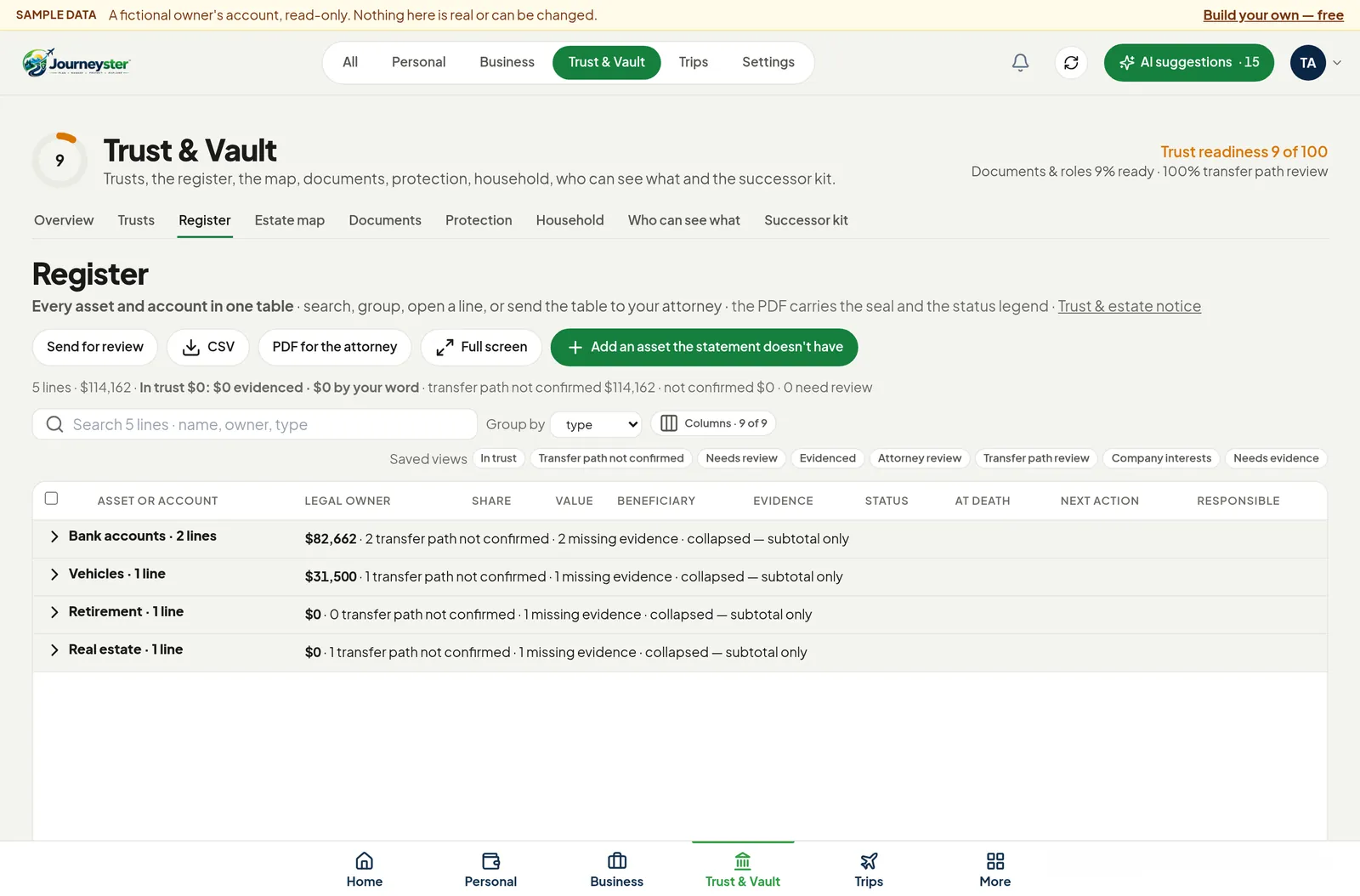
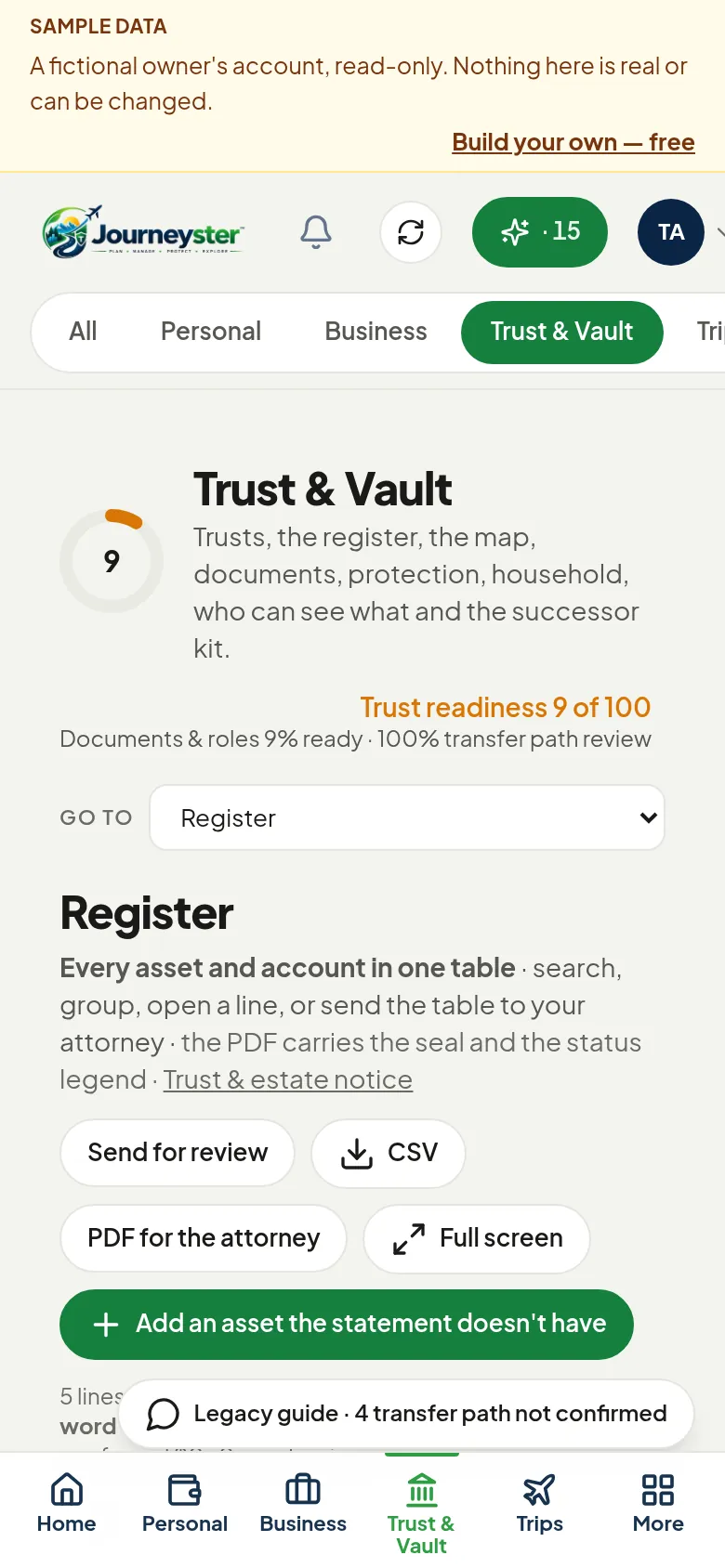
Trust & Legacy keeps a register of what each trust holds and marks an interest “not yet assigned” until the document is on file and your attorney confirms it. It records what the documents say; it does not decide ownership.
A general guide, not legal, tax or lending advice. Your lender, CPA or attorney decides what applies to you.